


Spec sheet
LFP-230-US datasheet
Full electrical, BMS, thermal & chemical-safety data, the same numbers our engineers test to.


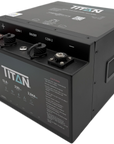
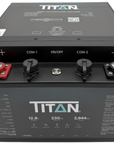
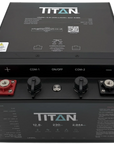
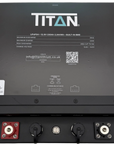
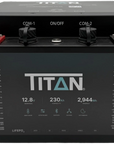
12,8V | 230Ah | 2.944 Wh
Tatsächlich erreichbare Kapazität - bis zu 245Ah
315 mm lang x 280 mm breit x 188 mm hoch
Unsere Antwort auf die Untersitzbatterie. 2.944 Wh nutzbare Energie bei 12,8V, verpackt in ein niedriges, breites Metallgehäuse, das in den Raum passt, den sonst niemand nutzen kann: unter einer Fahrer- oder Beifahrersitzkonsole, unter einer Sitzbank, in einem niedrigen Schrank oder unter einem Bettrahmen. 188 mm hoch, damit sie Sitzkästen und Schrankdeckel frei lässt, an denen ein höheres Industriepack scheitert, und alle Anschlüsse sitzen auf der Frontseite, sodass sie auf drei Seiten direkt an einer Wand anliegen kann.
Gleiche Zellen, gleicher individueller BMS und gleiche 250A-Ausgangsleistung wie bei unserer Standard-230Ah. Einzig die Form des Gehäuses ist anders. Montage auf der Basis, auf der Seite oder auf der Stirnseite - nur nicht verkehrt herum (kopfüber). Kostenloses Befestigungsriemen-Set bei jeder Batterie im Metallgehäuse enthalten.
| Fahrzeuganwendung | Einbaustatus | Hinweise |
| Wohnmobil- / Transporter-Sitzkonsolen | Zuerst ausmessen | Für Untersitz-Hohlräume ausgelegt. Sitzkonsolen-Innenmaße variieren je nach Ausbauer - prüfen Sie 315 x 280 x 188 mm an Ihrem Modell. |
| Campervan-Sitzbänke und Sitzkästen | Direkt passend | Niedriges Profil lässt die meisten Sitzdeckel und Polsterkonsolen frei. |
| Wohnwagen-Frontschranke / Bettrahmen | Direkt passend | Breit und niedrig statt hoch. Passt unter Festbetten und in flache Schränke. |
| Marine-Schränke und Bilge-Regale | Direkt passend | Frontseiten-Anschlüsse ermöglichen Anliegen an einer Schottwand auf drei Seiten. |
| Off-Grid-Hütten und Schränke | Direkt passend | Stapelt ordentlich auf einem Regal, wo die Höhe begrenzt ist. |
| Wichtiger Hinweis | Nur Versorgung | Für den Betrieb von Verbrauchern ausgelegt. Keine Starterbatterie. |
| Abmessungen | 315 mm (L) | 280 mm (B) x 188 mm (H) |
Alle TITAN-Batterien verwenden Lithium-Eisenphosphat-(LiFePO4)-Prismenzellen - die thermisch und chemisch stabilste Lithiumchemie, die es gibt. Kein Kobalt, kein Nickel, kein Gasabgang, keine Säure. Der Kompromiss ist eine etwas niedrigere Zellspannung (3,2V pro Zelle, 4 Zellen = 12,8V) und eine geringere Energiedichte als die NMC-Zellen in Elektrofahrzeugen. Dafür erhalten Sie Lebensdauern, die NMC verbrauchsgüterhaft wirken lassen: 3.000 bis 25.000 Zyklen je nach Nutzung, gegenüber 1.000 bis 2.500 bei NMC.
LiFePO4 gilt heute weithin als sicherer als Blei-Säure. Zellen können in jeder Orientierung installiert werden (aufrecht ist optimal), enthalten kein flüssiges Elektrolyt und sind vollständig recycelbar.
Ein Zyklus ist eine vollständige Entladung plus eine vollständige Aufladung. Die Anzahl hängt davon ab, wie tief Sie entladen:
Zum Vergleich: Die beste Blei-Säure-Gelbatterie erreicht höchstens 350-400 Zyklen bei 80% DoD. Eine TITAN bei gleicher Tiefe liefert 6.000 - rund das 15-fache an Nutzungsdauer.
Unsere Zellen sind lange, flache Prismen, die das rechteckige Gehäuse von Ende zu Ende ausfüllen. Zylindrische Zellen hinterlassen Lücken zwischen jeder Zelle und sind deutlich schwerer zu reparieren (viel Punktschweißen), deshalb zahlen wir den Mehrpreis für prismatische Zellen und geben den Kapazitätsgewinn an Sie weiter. Das Aluminium-Zellgehäuse verteilt Wärme gleichmäßig: selbst bei voller 250A-BMS-Freigabe maßen wir Spitzenzelltemperaturen um 45°C, weit innerhalb der Spezifikation (thermisches Durchgehen beginnt erst bei rund 100°C). Heizmatten funktionieren mit prismatischen Zellen ebenfalls besser - jede Zelle liegt am Heizelement an, statt nur am äußeren Ring eines zylindrischen Packs.
230Ah in Blei-Säure zu erreichen bedeutet fünfeinhalb Exide ER550 115Ah-Batterien parallel auf 630Ah. Eine TITAN 230Ah Untersitzbatterie ersetzt das alles - und zwar in einem Raum, den Sie vermutlich schon haben.
Wir geben Kapazität in Wh (Wattstunden) an, weil Ah allein die Chemie ignoriert. TITAN-Lithium liefert 100% der Nennkapazität. Gel erreicht rund 90%, AGM 75%, offene Blei-Säure 60%. Berücksichtigt man das, hat eine TITAN 230Ah mehr als die doppelte real nutzbare Kapazität einer Blei-Säure-Batterie mit gleicher Nennangabe.
Keine einzelne Blei-Säure-Batterie kommt dieser Kapazität nahe. Der ehrliche Vergleich sind fünfeinhalb parallel geschaltete ER550-Klasse-Versorgungsbatterien für gleiche nutzbare Wh - das sind 143 kg Blei-Säure in Ihrer Installation. Eine TITAN Untersitzbatterie schafft das mit 25 kg. 118 kg weniger zählen auf der Antriebsachse eines Wohnmobils, an der Fähre und an der Zapfsäule. Unter einem Sitz liegt das Gewicht außerdem tief und innen statt in einem Heckschrank.
Fast jedes Watt, das Sie hineinstecken, kommt wieder heraus. Ein idealer Partner für Solar - keine verschwendete Ladung - und nimmt sehr hohe Ladeströme problemlos an: 0 bis 95% in unter zwei Stunden bei 100A+.
Das Batteriemanagementsystem ist die Platine zwischen den Zellen und den Klemmen. Es entscheidet, ob eine Lithiumbatterie 15 Jahre hält oder sich in zwei Jahren selbst zerstört. Die meisten Marken setzen eine Standardplatine mit generischen Parametern ein. Wir nicht.
Unser BMS ist individuell, mit Parametern, die auf die exakte Zellspezifikation abgestimmt sind, die wir verwenden. So können wir die Zellen bis an ihre tatsächlichen sicheren Betriebsgrenzen fahren, ohne den Schutz zu gefährden. So holen wir auch 5-10% zusätzliche nutzbare Kapazität aus jeder Zelle (eine 230Ah kann voll geladen als 245Ah angezeigt werden). Wir können die Bonuskapazität nicht chargenweise garantieren, aber der BMS mappt seine 100%-Anzeige automatisch neu, sodass die App immer zeigt, was Sie tatsächlich haben.
Tiefentladung, Überspannung, Unterspannung, Überstrom, Kurzschluss, Übertemperatur, Untertemperatur, Zellausgleichsfehler und mehr. Alle Schutzfunktionen sind temporär - sie setzen sich entweder selbst zurück oder löschen sich, sobald die Batterie wieder geladen wird. Die 250A-Dauerfreigabe bei diesem Modell (280A für 5 Sekunden, 300A für 1 Sekunde) ist dank Premium-MOSFETs, überdimensionierter Kühlkörper und korrekt dimensionierter interner Verkabelung führend in ihrer Klasse.
Passiver Ausgleich ist günstig: Zellen entladen sich gegenseitig, und das war's. Aktiver Ausgleich verschiebt Energie aktiv zwischen Zellen und schützt die schwächste Zelle davor, die gesamte Arbeit zu leisten. Die meisten Marken wählen eines. Wir nutzen beides - passiv bei kleinen Spannungsdifferenzen, aktiv bei größeren. Hält den Eigenverbrauch des BMS niedrig und liefert trotzdem den vollen Nutzen aktiven Ausgleichs. Automatisch, am aktivsten beim Laden über 3,4V pro Zelle, und volle Wirkung zwischen 90-100% SOC.
Lithium darf unter 0°C nicht geladen werden, ohne Zellschäden zu riskieren. Unsere eingebaute Heizmatte umschließt das innere Pack und schaltet automatisch bei rund 2°C ein, sobald Ladestrom anliegt. Sie bezieht zuerst Strom vom Ladegerät, und wenn das Ladegerät nicht nachkommt, zieht sie bis zu 3,6A aus der Batterie selbst, um die Zelltemperatur auf 10°C zu bringen, bevor die Ladung wieder zu den Zellen geleitet wird. Rechnen Sie bei Kälte mit rund 20 zusätzlichen Minuten Ladezeit. Entladung ist unbeeinträchtigt und funktioniert bis -20°C.
Eine vollständig entladene Lithiumbatterie, die monatelang steht, kann eine Lithiumbatterie sein, die nicht mehr zurückkommt. Zwei Ruhemodi verhindern das:
Wechselrichter, Wasserpumpen, Rangierhilfen und Kompressoren können beim Anlauf für Mikrosekunden 1.000A+ ziehen. Viele BMS lesen das als Kurzschluss und schalten ab. Unseres ist abgestimmt, diese Spitzen ohne Störabschaltungen zu überstehen, sodass sich Anlauflasten verhalten wie bei Ihrer alten Blei-Säure.
Zwei Kommunikationsports an der Frontseite lassen die Batterie mit kompatiblen Wechselrichtern, Ladegeräten und GX-Geräten kommunizieren. Standard ist Victron CANBUS (VE.CAN und BMS.CAN) und kompatibel mit Victron DVCC ab Werk. RS485 und NMEA2000 werden unterstützt, und der Datenmodus kann auf Anfrage auf andere Marken oder Protokolle umgestellt werden - vermerken Sie es in den Bestellnotizen, und unsere Techniker stellen es vor dem Versand ein.
Bekannt funktionierend mit:
Kabelsets für jedes Protokoll sind in unserem Shop vorrätig.
Untersitz-Räume werden vom Ausbauer angelegt, nicht vom Chassis-Hersteller, deshalb variieren sie. Prüfen Sie 315 mm lang x 280 mm breit x 188 mm hoch an Ihrer Sitzkonsole oder Ihrem Schrank, und lassen Sie Platz für Kabel zur Frontseite. Bis zu acht parallel für 1.840Ah, bis zu vier in Serie für 48V-Systeme.
Prüfen Sie Ihr Ladegerät. TITAN-Batterien akzeptieren AGM- oder "Sealed"-Modi, wenn Ihr Ladegerät keine dedizierte Lithium-Voreinstellung hat. Ziel-Ladeschlussspannung: 14,4V.
Kompatibel mit Ladungsverteiler-Relais und DC-DC-Ladegeräten ab Werk. Das sind Tiefentladungs-Versorgungsbatterien für den Betrieb von Geräten - keine Starterbatterien.
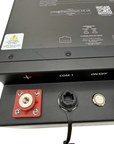
Leistungsstarke Kupfer-M8-Klemmen an der Frontseite, neben den Kommunikationsports und dem Ein/Aus-Schalter, sodass alle Verkabelung von einer Seite her erfolgt. Zwei M8-Schrauben und Federringe sind für direkte Ringkabelschuh-Verkabelung enthalten. Runde (SAE/Kfz-)Klemmen stattdessen? Kein Problem - wir legen hochwertige, heiß geprägte Messing-Kfz-Adapter kostenlos bei. Vermerken Sie es an der Kasse, und wir legen sie bei.
Ein Einbauhinweis, der zweimal gelesen werden sollte: Die Klemmen sitzen auf erhöhten, isolierten Säulen mit einer Befestigungsschraube auf jeder Seite. Setzen Sie Ihre Ringkabelschuhe so, dass Crimp-Hülse und Kabel vom Gehäuse weg zeigen, damit kein Teil des Ösens zu diesen Schrauben hinüberreichen kann. Flach und nach außen montiert gibt es nichts zu bedenken.
188 mm hoch, 315 mm lang und 280 mm breit - passt, wo ein standardmäßig hohes Pack nicht hineinkommt. Aufrecht auf der Basis ist optimal für Lebensdauer und Leistung, aber die Zellen sind in jeder Orientierung stabil, die der Einbau erfordert. Das Gehäuse ist Metall, und ein schwerer Befestigungsriemen ist kostenlos enthalten - verwenden Sie ihn. Alles unter einem Sitz sollte so gesichert sein, dass es beim Bremsen nicht verrutscht.
Bluetooth ist eingebaut. Die kostenlose TITAN app (iOS und Android, 10 Sprachen) zeigt Live-Spannung, Strom in Ampere und Watt, SOC als Prozent und in Ah, Einzelzellspannungen, Innentemperatur, geschätzte Zeit bis voll oder leer, Schutzabschalt-Historie und live Zellausgleich.
Sie verwaltet mehrere Batterien in Serie oder parallel und berechnet Summen automatisch neu - ob eine 230Ah Untersitzbatterie oder drei parallel, die Werte auf dem Bildschirm entsprechen dem tatsächlichen Pack.
Wir sind von der Verarbeitung so überzeugt, dass wir jede Grade-A-Zellen-Batterie mit einer lebenslangen Garantie abdecken - vollständig übertragbar. Unser Mutterunternehmen ist seit 1948 ununterbrochen am Markt, deshalb werden wir in 20 Jahren noch da sein, um sie einzulösen.
Was die Garantie nicht abdeckt, ist Verschleiß. Alle Batterien verlieren mit der Nutzung Kapazität - je härter Sie sie beanspruchen, desto schneller. LiFePO4 ist bemerkenswert widerstandsfähig: rechnen Sie mit 5-10% Kapazitätsverlust pro Jahrzehnt normaler Nutzung. Eine neue 230Ah zeigt voll geladen rund 245Ah, eine 10 Jahre alte 230Ah rund 215Ah, eine 20 Jahre alte 230Ah rund 195Ah. Natürliche Degradation ist kein gültiger Garantiefall - wenn eine Batterie nicht mehr genug Kapazität für Ihren Einsatz hält, ist es Zeit zum Austausch.
Die Garantie deckt Komponenten gegen vorzeitiges Versagen durch Herstellungsfehler ab. Vollständige Bedingungen finden Sie auf unserer Garantieseite.
Die TITAN 230Ah Untersitzbatterie kostet neu £700. Über ihre 10-jährige Konstruktionslebensdauer sind das £70 pro Jahr. Das nächste Blei-Säure-Äquivalent - zwei Exide AGM EP2100 parallel - liegt bei rund £1040 mit 4-jähriger Konstruktionslebensdauer, also etwa 2,5-facher Austausch im gleichen Zeitraum. Das sind £260 pro Jahr, mit wiederholter Arbeitszeit bei jedem Austausch. Rund £1900 gespart über 10 Jahre, bevor Sie Gewicht, Volumen und Effizienz einrechnen. In der Praxis sehen die meisten unserer Kunden 15-20 Jahre aus einer TITAN.
Bei einem Defekt reparieren wir das ausgefallene Modul - BMS, Balance-Platine, eine einzelne Zelle - statt die gesamte Batterie zu ersetzen. Geringere Kosten für Sie, geringerer CO2-Fußabdruck, schnellere Bearbeitung. Als Batteriefamilie seit den 1950er Jahren gibt es wenig, was wir nicht schon einmal wieder aufgebaut haben.
Same usable energy as 5.5× standard 115Ah / 550Wh leisure batteries (we benchmark against the Exide ER550). One TITAN. A fraction of the weight. A custom BMS that handles loads you'd never trust to a flooded leisure battery.
Lead-acid delivers ~40% of its rated Ah in real-world use before damage. TITAN delivers 100%, even at 0% SoC.
~85% lighter for the same usable energy — one industrial 345mm TITAN instead of 5.5 flooded leisure batteries.
Self-resetting protections, no nuisance trips. Lead-acid? Whatever the cables and cold can take.
Replaces 5–6 standard ER550-class leisure batteries with one industrial 345mm TITAN. One battery, with the usable energy of 5.5 of them.
Comparisons are Wh-based against the Exide ER550 (115Ah / 550Wh / ~26kg) flooded leisure battery — one of the few lead-acid units that publishes a Wh rating. Lead-acid usable energy assumes ~40–50% depth of discharge and voltage sag under load; TITAN figures assume 100% DoD at the C/5 rating. Nearly all of the rated capacity is available when needed; routine 10-90% use simply reduces long-term cell wear.
Everything that ships with the battery, in writing. Spec sheet for the engineers, install & care manual for everyone else.
Full electrical, BMS, thermal & chemical-safety data, the same numbers our engineers test to.
Install, charge, care and warranty terms, covering every TITAN battery in the current range.
Fitting lithium in a boat or motorhome? Let your insurer know.
Most marine and leisure-vehicle policies ask to be told about changes to the battery system. It is a two-minute call: tell them you have fitted a TITAN LiFePO4 battery that is type tested to IEC 62619:2022, CE and UKCA marked, UN38.3 transport tested and RoHS compliant, with an IP67-sealed case and a custom BMS that protects against over-charge, over-discharge, short circuit and over-temperature. If you added a lithium-rated main fuse to your order (recommended), mention that too - insurers like to hear it. Keep your datasheet handy; it covers everything they may ask.
Most lithium leisure batteries are built down to a price. We design ours from the BMS out. Three things every TITAN ships with, no matter the size.
A custom BMS, not an off-the-shelf board. Oversized heat sinks, premium cabling, anti-vibration silicone on every contact, module-based for in-field repair, and our own comms package so no third-party app can edit your parameters.
Read the deep diveEVE and CATL cells, factory-graded for capacity and internal resistance, then top-balanced before assembly. We test every pack on the bench in Cheltenham before it leaves the building.
How we testDIN-format casework so it drops straight in where the lead-acid came out. Marine-spec terminals, an integrated low-temp charge cut-off, and a Bluetooth radio paired to the TITAN App for live monitoring from your phone.
Meet the app
